


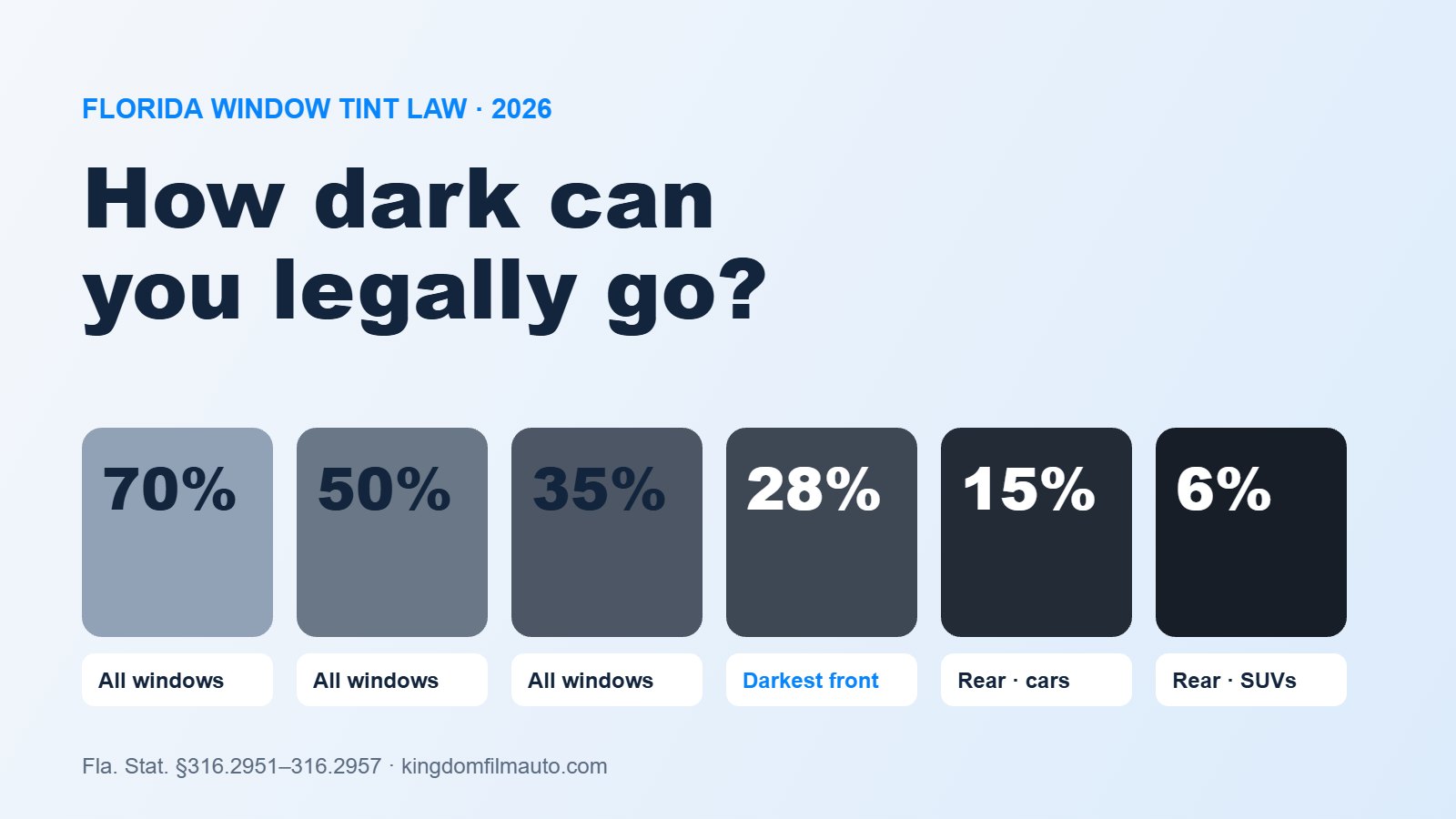
Short answer: in Florida, your front side windows must let in at least 28% of visible light. Rear side windows and the back glass can go down to 15% on cars, or 6% on SUVs, trucks and vans. On the windshield, tint is only allowed as a strip at the top, above the AS-1 line. Here is everything you need to know before you tint in South Florida.
Florida tint limits at a glance
| Window | Sedan / coupe | SUV, truck, van |
|---|---|---|
| Windshield | Non-reflective strip above the AS-1 line | Non-reflective strip above the AS-1 line |
| Front side windows | 28% or lighter | 28% or lighter |
| Rear side windows | 15% or lighter | 6% or lighter |
| Back glass | 15% or lighter | 6% or lighter |
| Reflectivity, front sides | 25% max | 25% max |
| Reflectivity, rear | 35% max | 35% max |
Source: Florida Statutes §316.2951–316.2957. Laws can change, so always check the current statutes.
What does the percentage mean?
The number is VLT, or visible light transmission: how much light passes through the glass and the film together. A lower number means a darker window. A 50% film lets half the light through. A 5% “limo” film lets almost nothing through.
One detail many drivers miss: most factory glass is already slightly tinted. When a film goes on top, the final reading is lower than the number on the film box. A professional installer measures your glass first, so the final result stays legal.
Front side windows: 28% is the line
The driver and front passenger windows are where most tickets happen. Florida law requires at least 28% light transmission and no more than 25% reflectivity on these windows. That makes 28% the darkest legal shade for the front, and it is our most requested shade for that reason.
Want a darker look? A common setup is 28% on the front and 15% (cars) or 6% (SUVs) on the rear. You get privacy in the back seat and stay legal up front.
Rear windows: it depends on your vehicle
Florida separates regular passenger cars from multipurpose passenger vehicles, the category that includes most SUVs, pickups and minivans.
- Cars (sedans, coupes, hatchbacks): rear side windows and back glass down to 15%.
- SUVs, trucks and vans: rear side windows and back glass down to 6%.
Reflectivity on all windows behind the driver is limited to 35%. If the back glass is tinted, the vehicle must have working side mirrors on both sides.
Windshield: only a strip at the top
Dark tint is not allowed across the windshield. You can add a non-reflective tint strip along the top, as long as it stays above the AS-1 line marked on most windshields. A good alternative is a clear ceramic windshield film: it blocks heat and UV without darkening the glass, so it doesn’t reduce your view.
Can I get darker tint with a medical exemption?
Yes. Florida issues medical exemption certificates for people with conditions that require limited light exposure, such as lupus and other autoimmune conditions. The certificate is tied to one specific vehicle (make, model, year and VIN), cannot be transferred, and becomes void if you sell the vehicle. Ask your doctor and the Florida Department of Highway Safety and Motor Vehicles (FLHSMV) about the current process.
What happens if my tint is too dark?
Driving with illegal tint in Florida is a noncriminal, nonmoving traffic infraction, so you get a ticket and a fine. Fines vary by county. Installing illegal tint is treated more seriously: it is a second-degree misdemeanor for the installer. That is why a reputable shop will refuse to put 20% on your front windows.
If you buy a used car with dark tint, have it measured. If it doesn’t pass, old film can be removed and replaced with a legal shade the same day.
Darker isn’t always cooler
Many drivers go dark because they want a cooler car. In Florida, the heat you feel comes mostly from infrared light, not visible light. A quality ceramic film blocks much of that infrared heat even at a legal 28% or 35%, so you can stay cool without risking a ticket.
Quick FAQ
Is 20% tint legal in Florida?
Only on the rear windows. 20% is too dark for the front side windows, which must be 28% or lighter.
Is 5% limo tint legal in Florida?
Not on a regular car. On SUVs, trucks and vans, the legal minimum for rear windows is 6%, so a true 5% film is still too dark.
Can I tint my whole windshield?
Not with a darkening film. You can use a clear heat-rejecting windshield film, or a tint strip above the AS-1 line.
Do colored tints matter?
Reflectivity is limited: 25% on the front sides and 35% on the rear. Mirror-like films usually exceed those limits.
Get legal tint in Fort Lauderdale
At Kingdom Film, we measure your glass, recommend a shade that is legal for your vehicle, and install ceramic tint at our shop on Sheridan St or at your home or office in Broward County.
Get a free window tint quote →
This article is for general information and is not legal advice. Last reviewed October 2026.

Leave A Comment